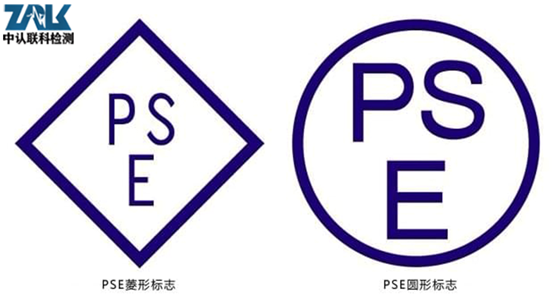
Required information for PSE certification of lithium batteries; PSE certification is a Japanese mandatory safety certification to prove that electrical and electronic products have passed the Japanese Electrical and Material Safety Law (DENAN Law) or the international IEC standard safety standard test. Japan’s DENTORL Law (Electrical Device and Material Control Law) stipulates that 498 products must pass safety certification to enter the Japanese market. Among them, 165 types of A products should obtain the diamond-shaped PSE mark, and 333 types of B products should obtain the round PSE mark.
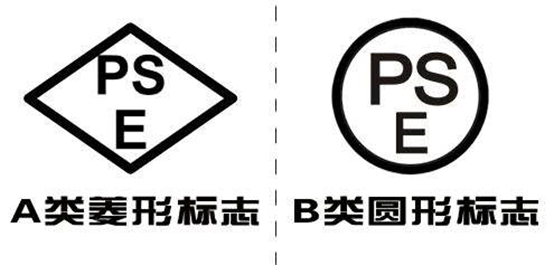
PSE certified product range
The 165 A-type product types are as follows:
Wires and cables, fuses, wiring appliances (electrical accessories, lighting appliances, etc.), current limiters, transformers, ballasts, electric heating appliances, electrical power application mechanical appliances (household appliances), electronic application mechanical appliances (high-frequency epilators) ), other AC electrical machinery and appliances (electrical insecticide, DC power supply device), and carrying engines.
333 kinds of B products are divided into 7 parts:
1. Simple wiring casing and junction box;
2. Simple single-phase motor between 100V-300V;
3. Household electric heating products;
4. Household electric or video game products;
5. Civil or household products that use light sources;
6. Household and commercial electronic products;
7. Other electrical products between 100V-300V.
Information required for PSE certification of lithium battery
1. Application and submission materials:
Business license, application form;
2. Test preparation materials:
(1) CB report (including Japan's difference test);
(2) Layout;
(3) PCB design drawings related to safety regulations;
(4) Specifications of transformers and coil parts;
(5) List of key components and their certificates;
(6) Japanese user manual or assembly manual;
(7) Japanese nameplates and warning signs (including PSE signs and notification of the supplier's name);
(8) Structural data table;
(9) A list and calibration certificate used in factory production.
3. Provide samples for testing:
At least two main inspection models and one derivative model each.
Lithium battery PSE certification process
1. The applicant provides samples and application documents;
2. Carry out sample test;
3. The applicant confirms the herbal report;
4. Issuing test reports.
PSE certification cycle of lithium battery
Round PSE certification cycle: about 10 working days
Diamond PSE certification cycle: about 20 working days
PSE certificate validity period
Type A diamonds have 3 years, 5 years, and 7 years (depending on the product)
Type B round has 1, 2 and 3 years (depending on the product)
For more information about PSE certification of lithium batteries, please call ZRLK for detailed inquiries, and professional engineers will answer you online. If you provide us with product pictures and specifications, we will give us the corresponding cycle, quotation and specific plan according to your product. Welcome to inquire.