In the globalized market environment, product certification is crucial for enterprises to enter specific markets. For cylindrical battery products, if they want to enter the Japanese market, PSE certification is a threshold that must be crossed.
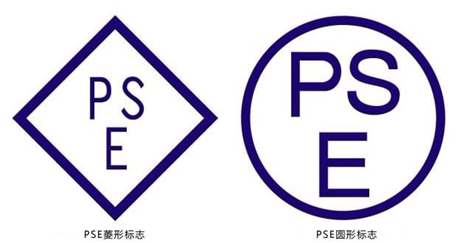
The full name of PSE certification is Product Safety of Electrical Appliances and Materials, that is, the product safety certification of electrical equipment and materials. It is a certification by the Japanese government to protect consumers from possible harm caused by electrical products. A certification system implemented to ensure that electrical products comply with safety standards. PSE certification is divided into two types: diamond-shaped and circular. Cylindrical batteries usually involve circular PSE certification, which is a non-mandatory voluntary certification. However, in actual market circulation, this certification is an important pass for products to enter the Japanese market.
Cylindrical batteries are widely used in various electronic products, ranging from common portable electronic devices to large equipment such as electric vehicles. Their safety is directly related to the life and property safety of users. Obtaining PSE certification can ensure that cylindrical batteries comply with strict safety regulations during design, manufacturing and use, reduce safety accidents caused by battery defects, and enhance consumers' trust in the products.
Before applying for certification, enterprises need to prepare a lot of materials Including business license, application form, CB report (including the difference test in Japan), circuit diagram, PCB design drawing related to safety regulations, specification sheet of transformer and coil parts, list of key components and their certificates, Japanese user manual or assembly manual, Japanese nameplate and warning signs (including PSE Mark and notify the supplier name, structural data sheet, as well as the list of instruments used in factory production and calibration certificates, etc. Well-prepared and accurate materials are the foundation for smoothly advancing the certification process.
In terms of the certification process, enterprises can conduct tests on their own or entrust laboratories to do so. After confirming that the products comply with JIS standards, they can submit a declaration. If the customer's battery or cell has already passed the CB certification of IEC62133-2:2017, Then, for the J62133 test, additional differential tests such as 28-day constant voltage charging of the battery cells, temperature cycling tests of the battery cells and batteries, low-pressure simulation tests of the battery cells, high-rate charging tests of the battery cells, and overcharge protection function tests of the battery are also required. Subsequently, the Japanese importer submits the filing to METI (Ministry of Economy, Trade and Industry of Japan), completing the entire certification process.
PSE certification provides a strong guarantee for cylindrical battery products to enter the Japanese market, prompting enterprises to enhance product quality and safety. For cylindrical battery manufacturers that are interested in expanding into the Japanese market, gaining a thorough understanding and actively applying for PSE certification is an important step towards achieving their market expansion goals.